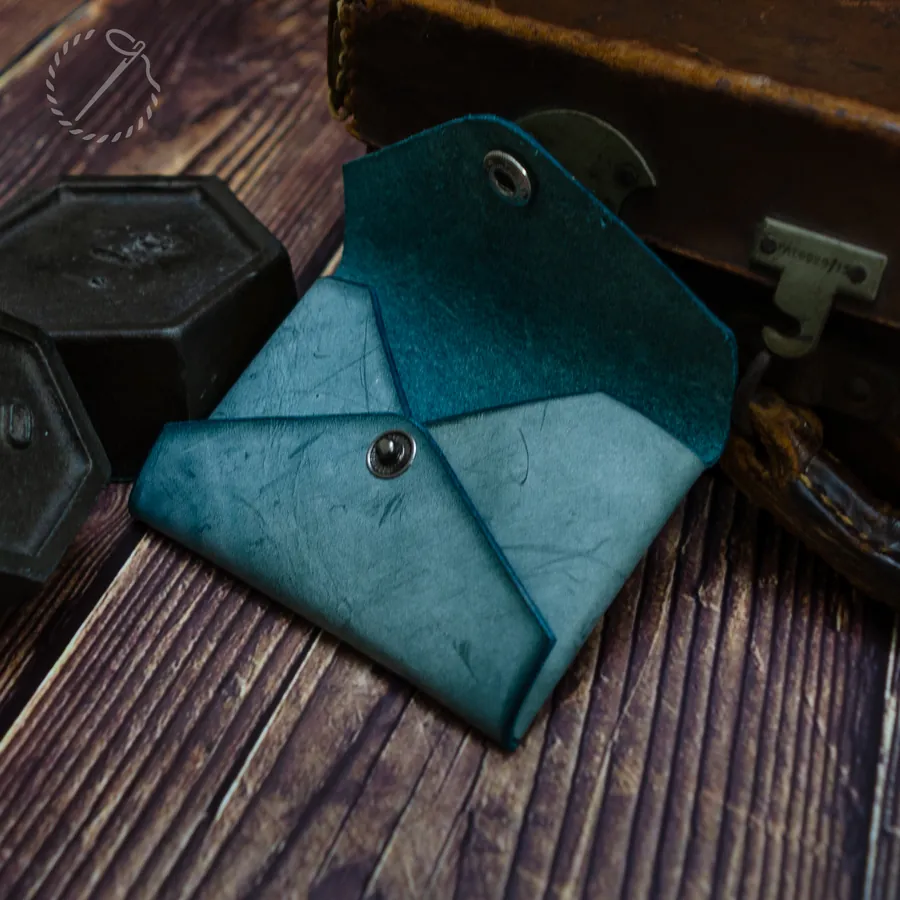
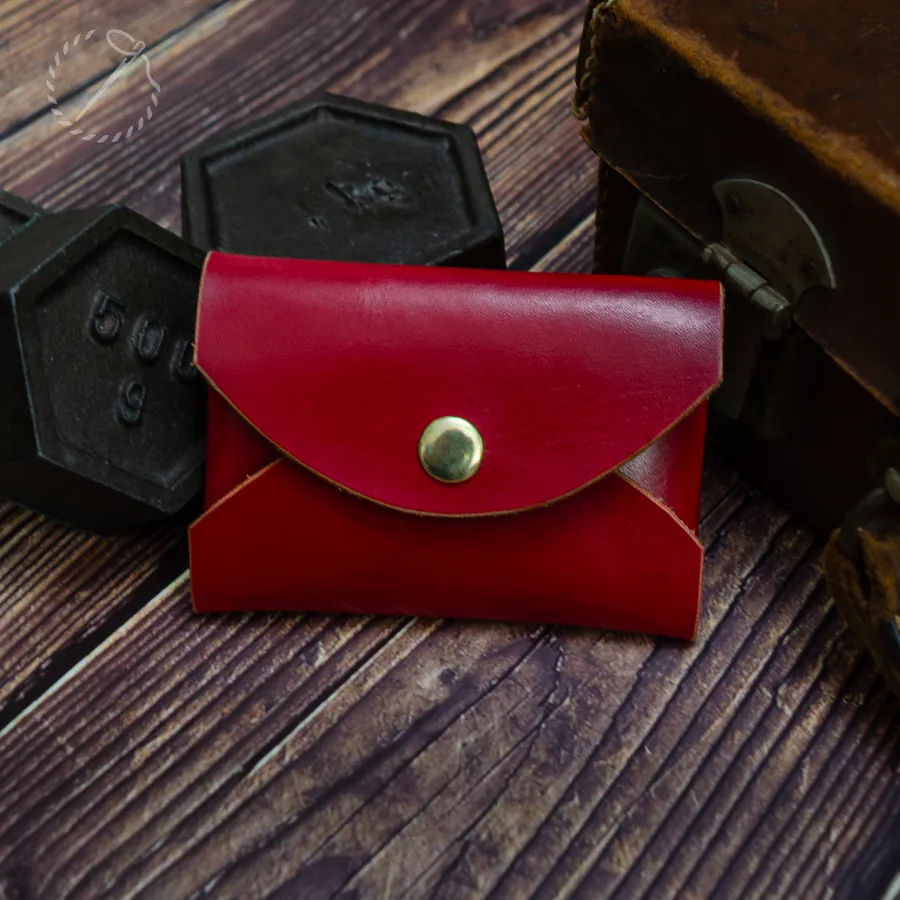
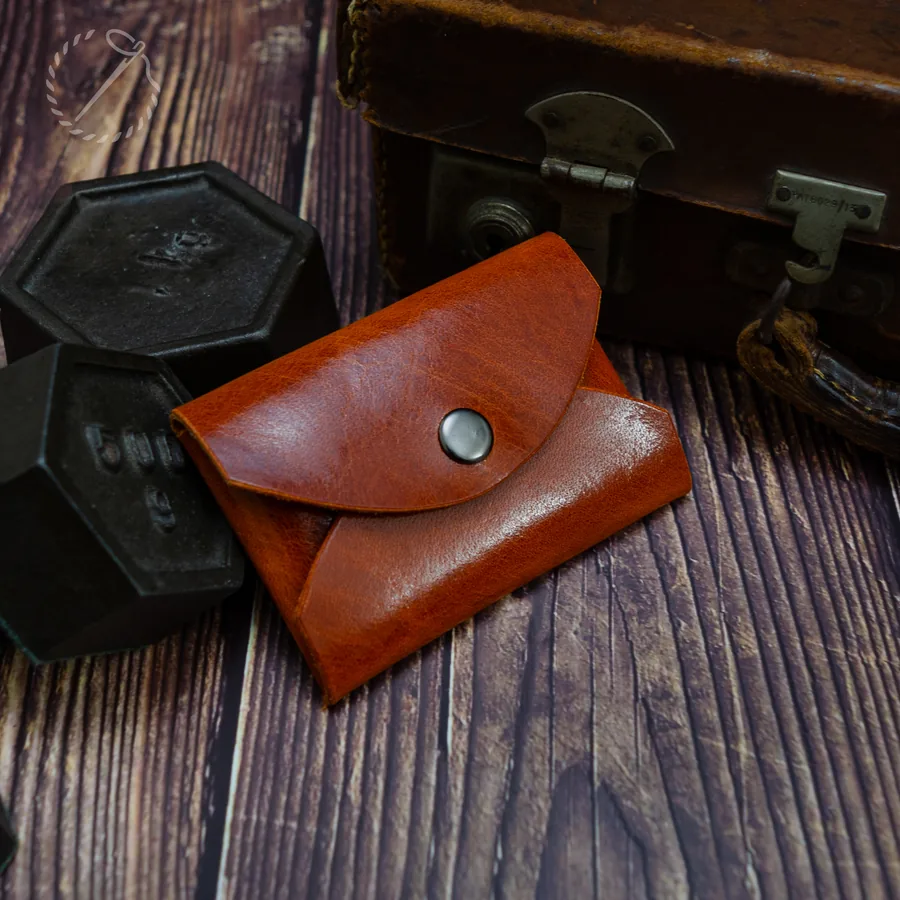
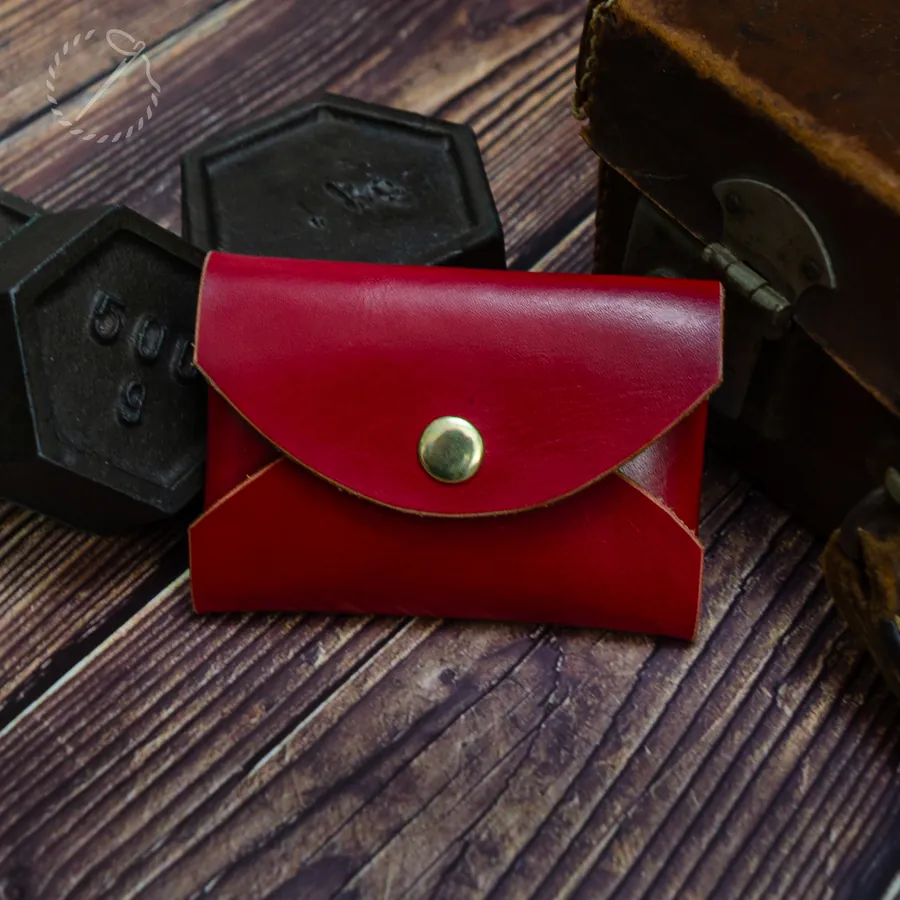
Envelope card wallet
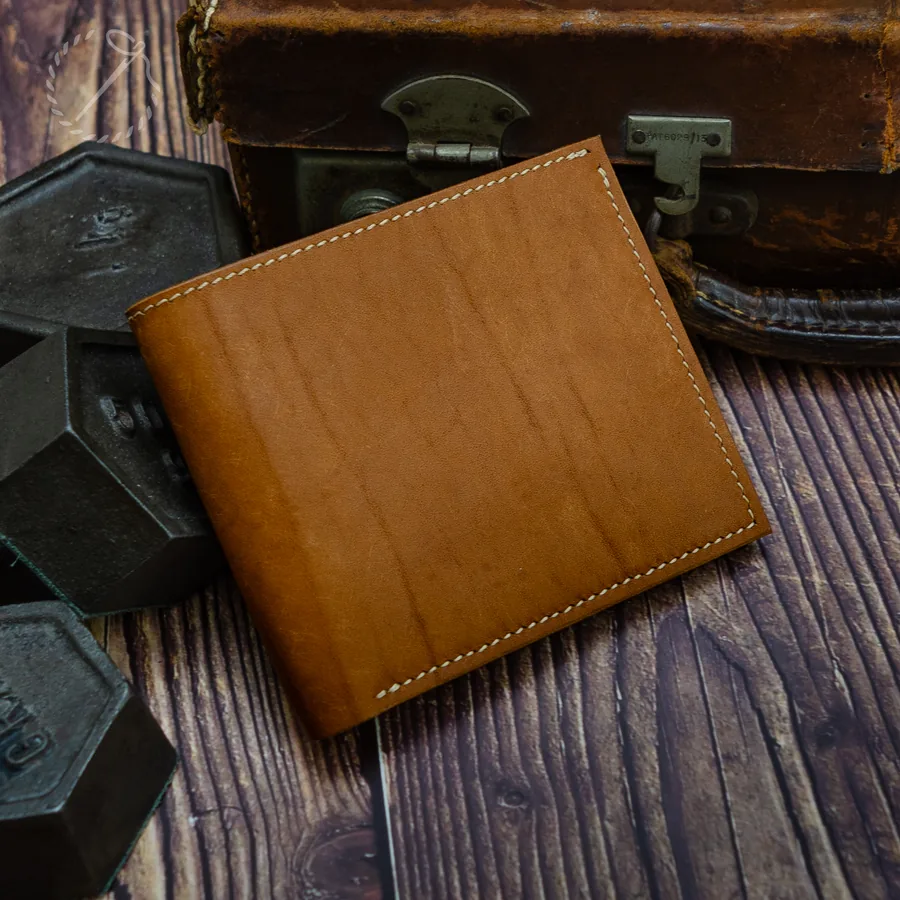
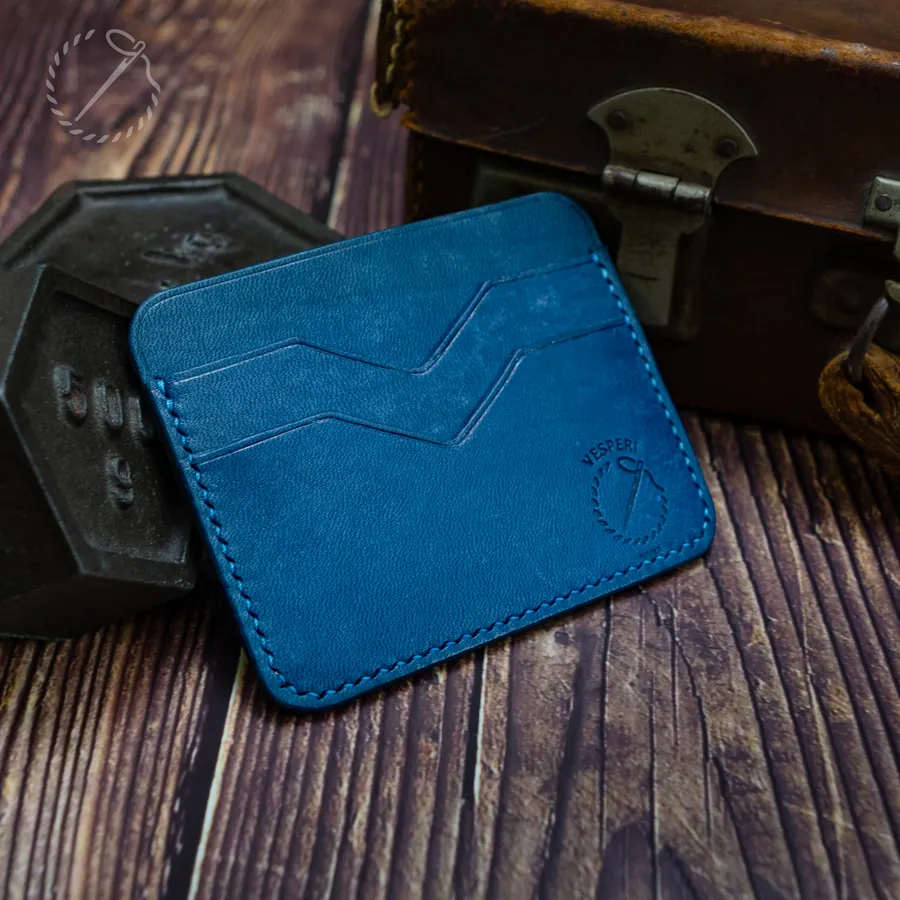
One pocket, folded rather than built up, so it stays slim in a front pocket. Natural hide that darkens with handling.
From £35

Made by hand in England
Card wallets, cardholders, bifolds and belts, made to order on one bench in Wellingborough. A slower way of working — the hide chosen for one piece, every edge finished by hand — and the reason it lasts.
About two weeks from order to dispatch.
Minimalist card wallets from £35·Slim cardholders from £65·Bifolds from £145·Belts from £70·Accessories from £25


Made one at a time from full-grain hides, cut and stitched by hand, and finished by hand at every edge. The best materials I can buy, worked with care — one of a kind, built to be repaired rather than replaced, and made to outlast anything stamped and glued. The pieces below have all gone to their owners: they are examples of previous commissions, not stock waiting to be sent, and each one is made to order.
One pocket, folded rather than built up, so it stays slim in a front pocket. Natural hide that darkens with handling.
From £35
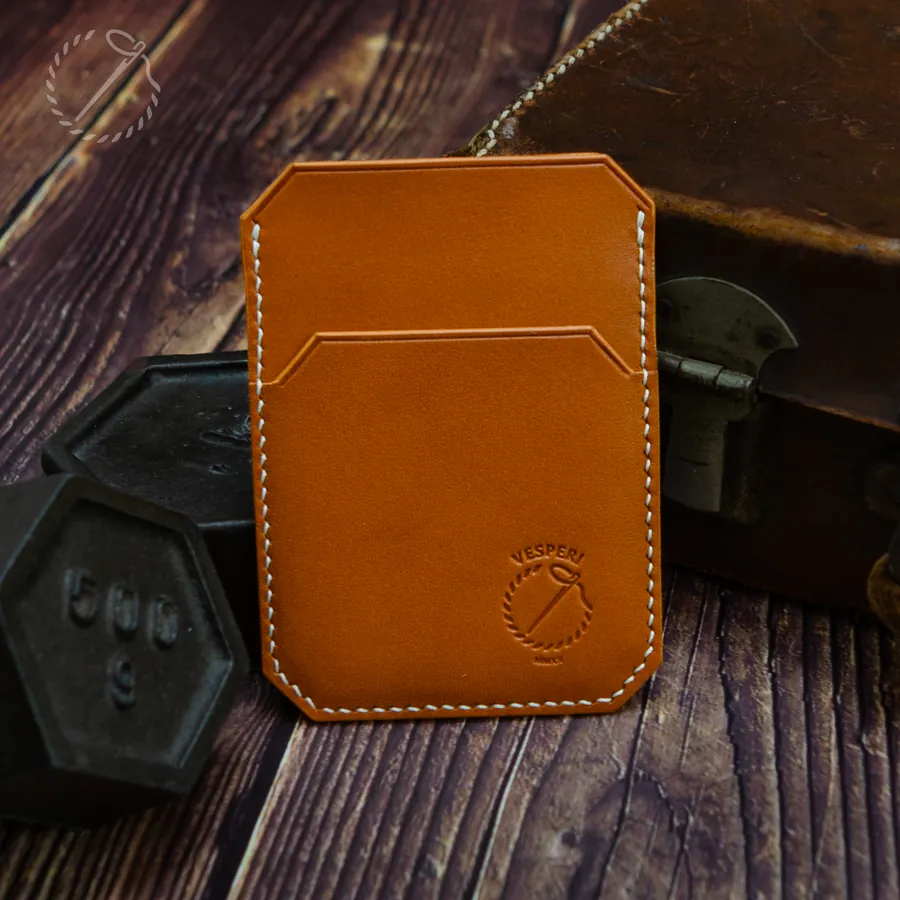
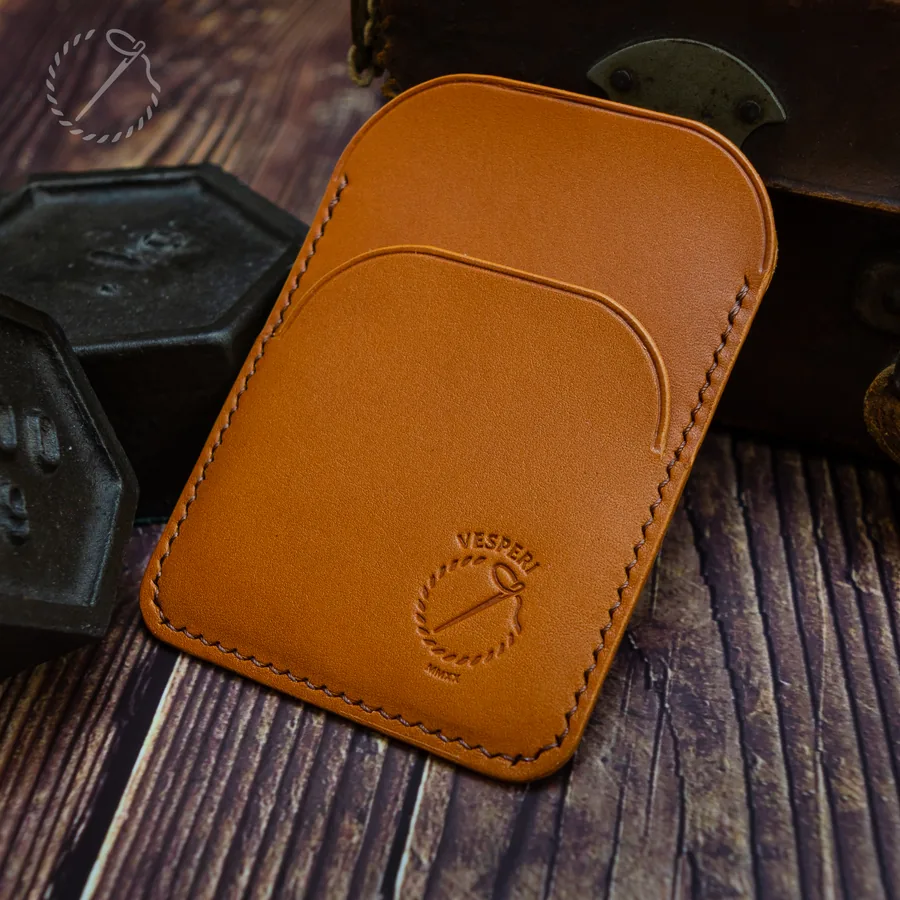
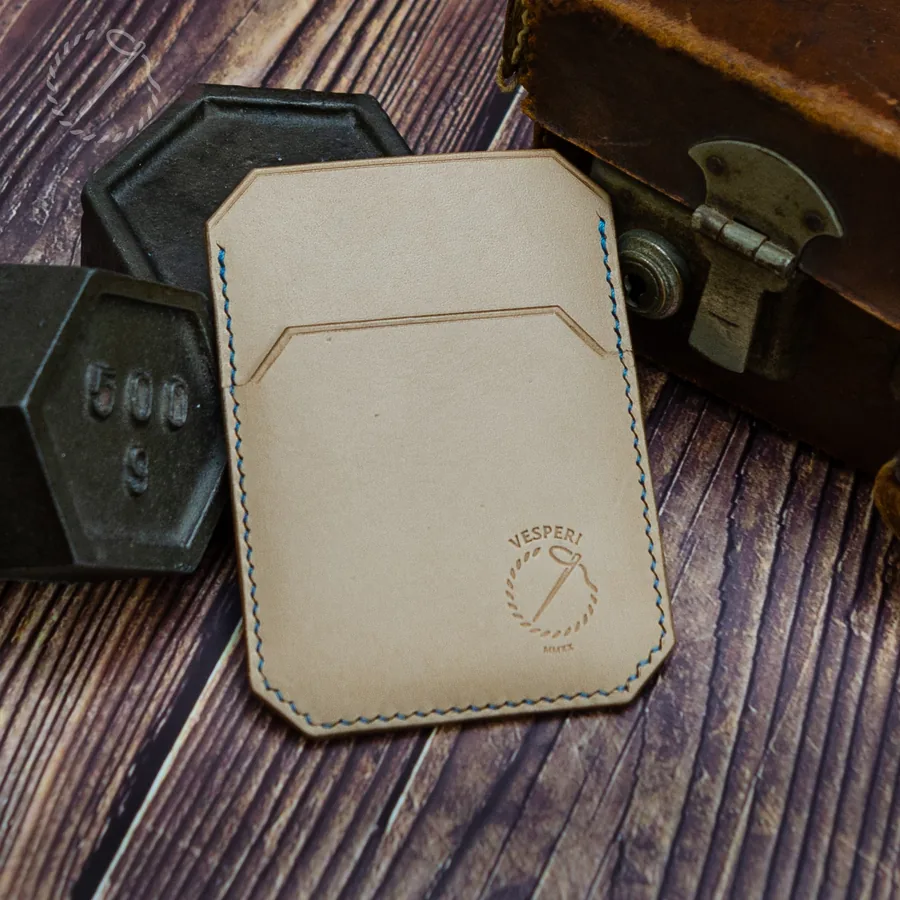
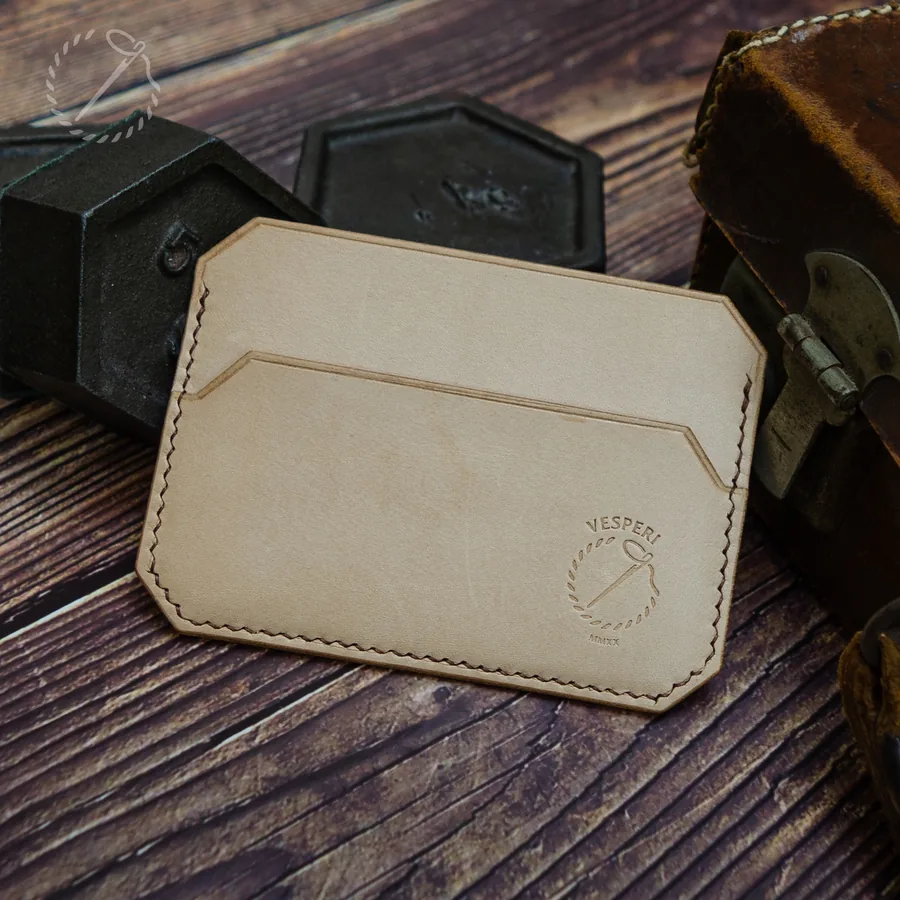
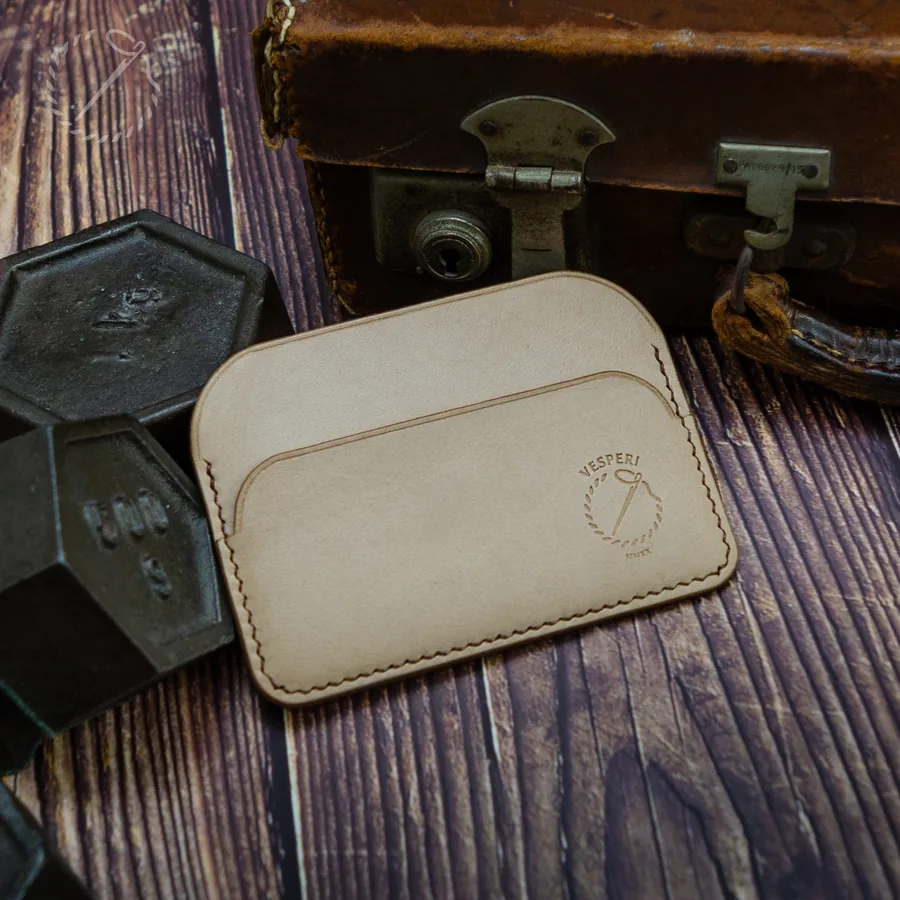
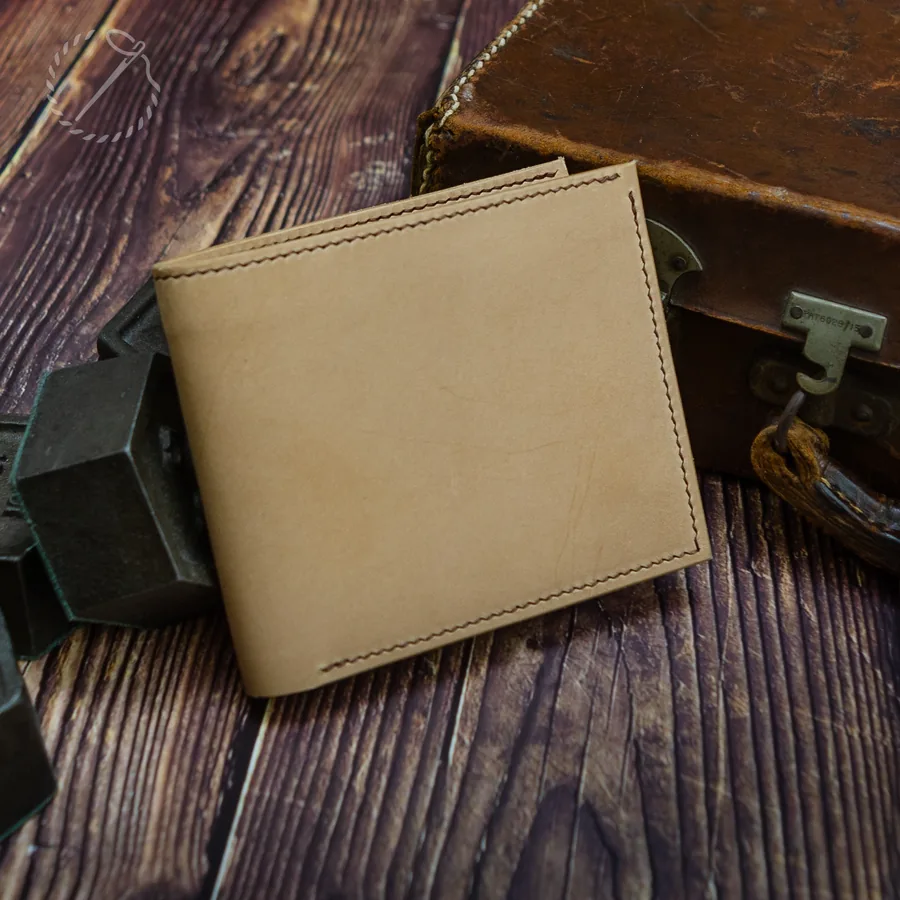
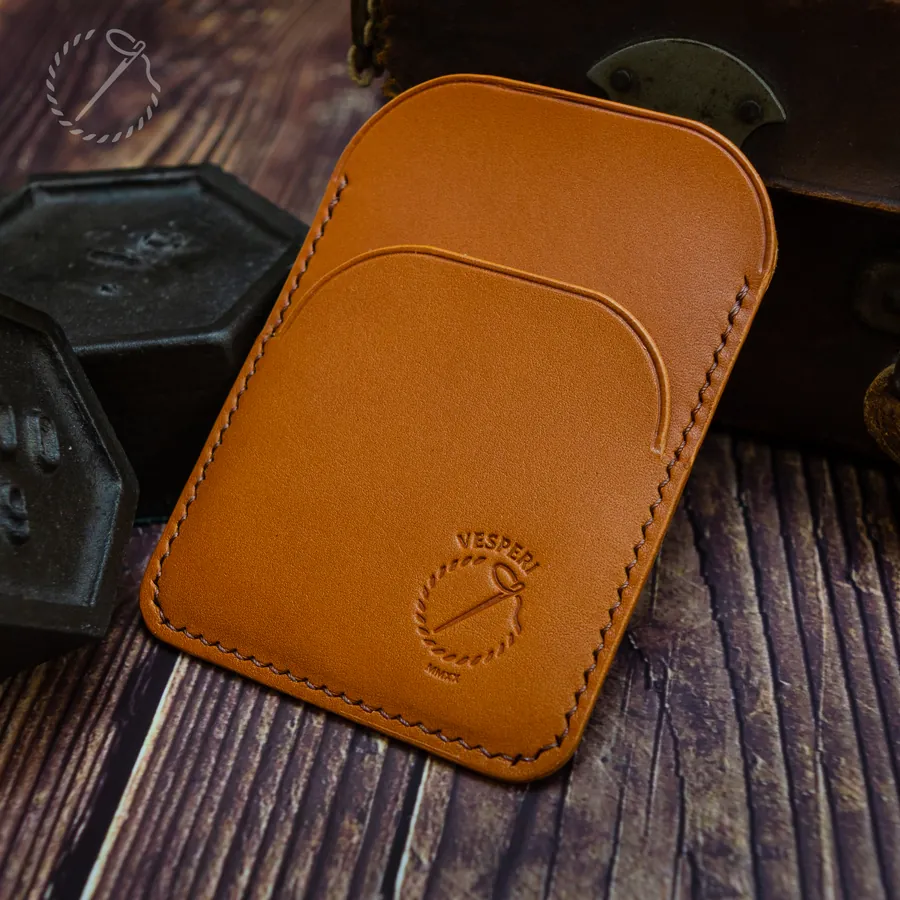
Tan and natural hides. Three pockets, skived thin at the fold so the stack stays flat rather than bulging.
From £65

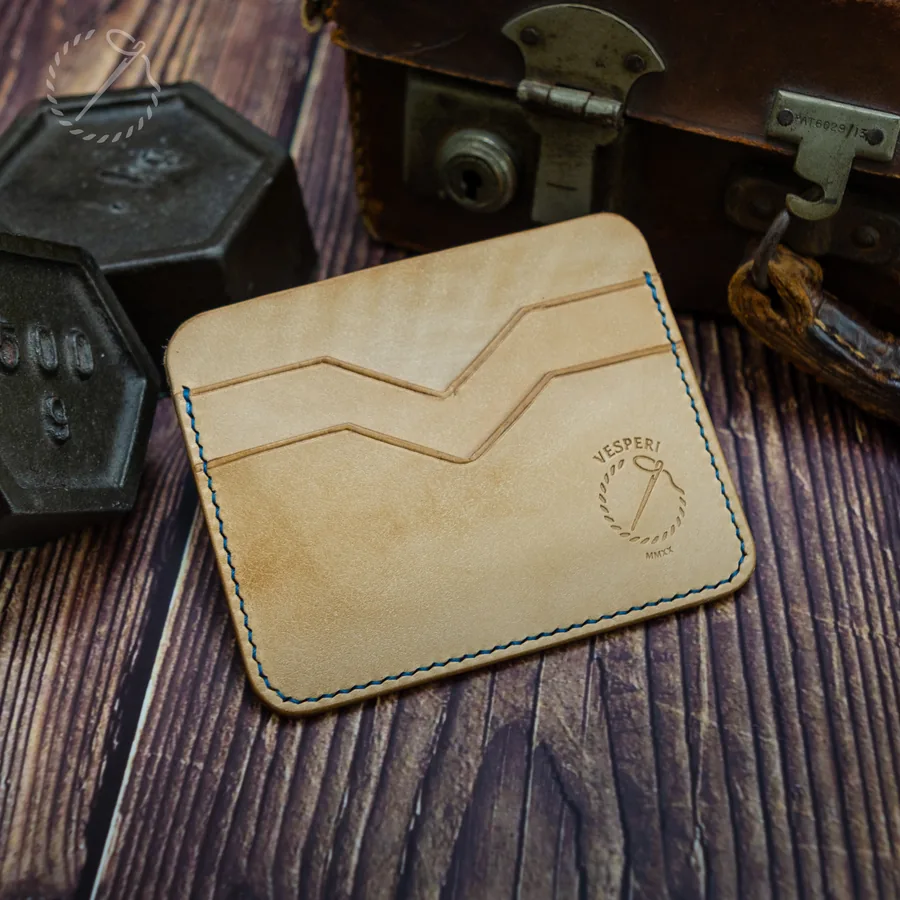
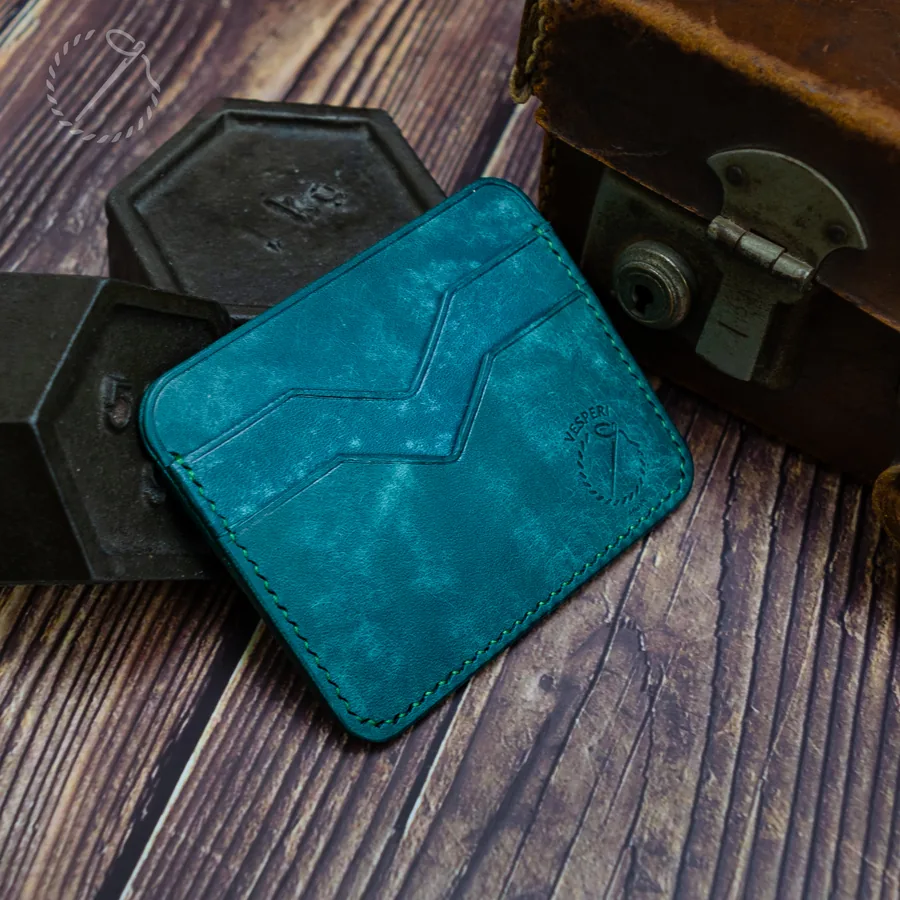
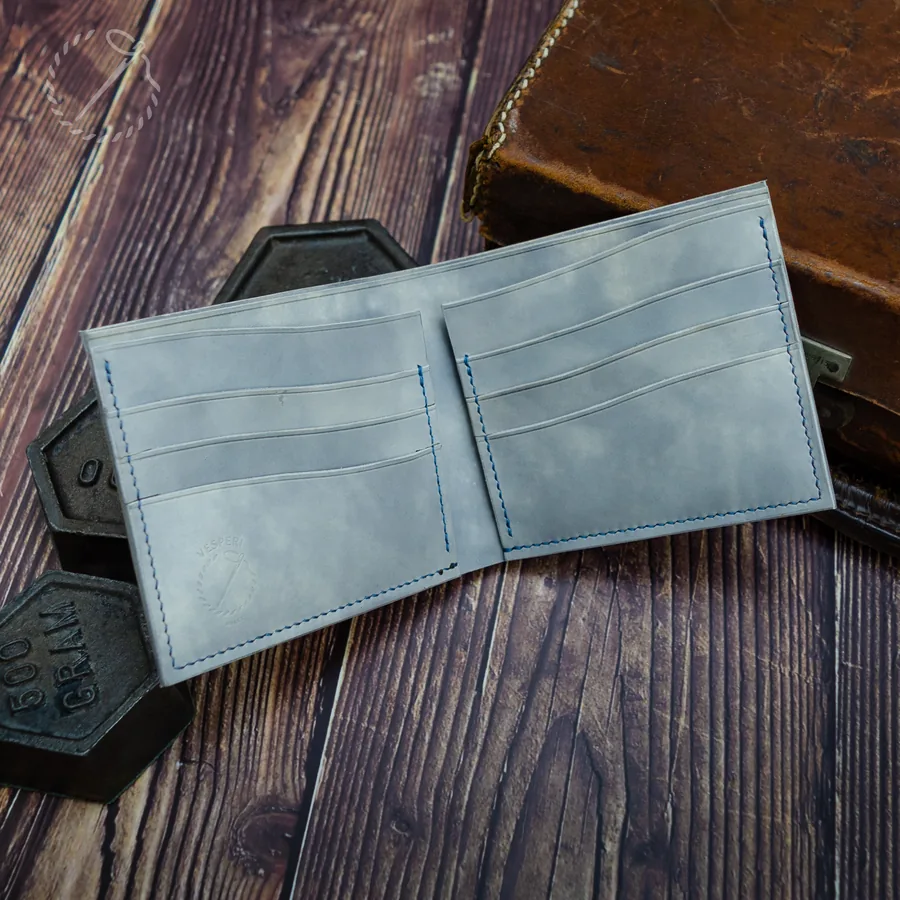
Two pockets on each side of a handcrafted card wallet, with a cash pocket in the middle.
From £80
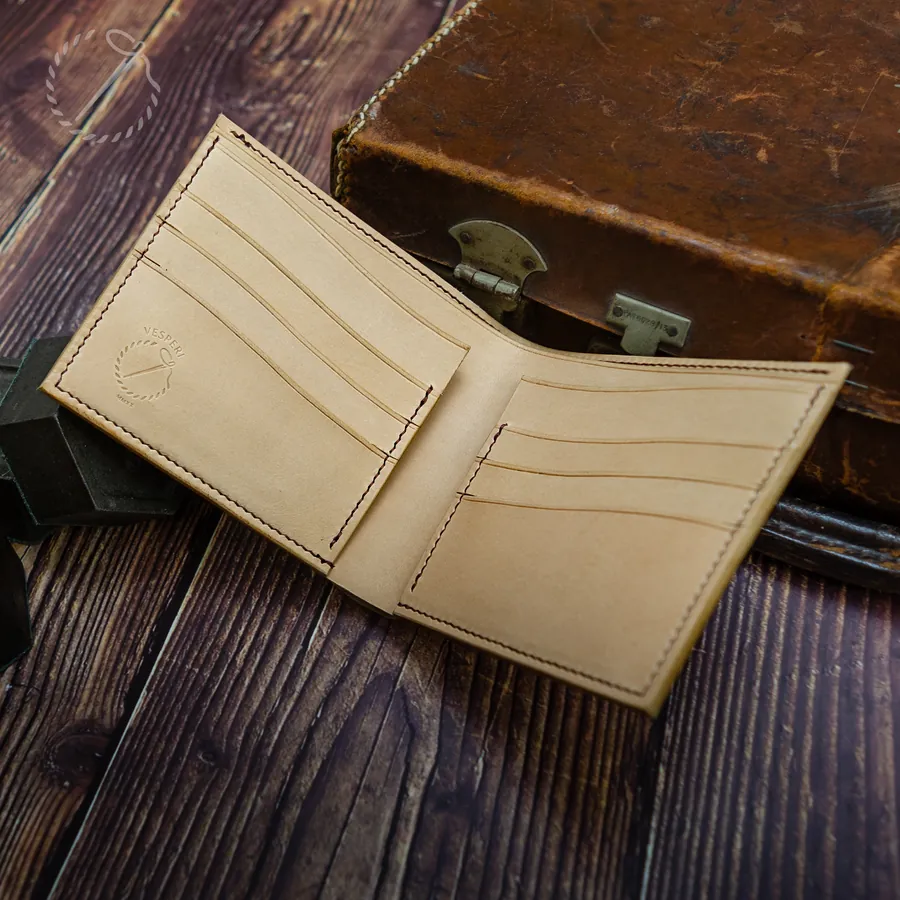
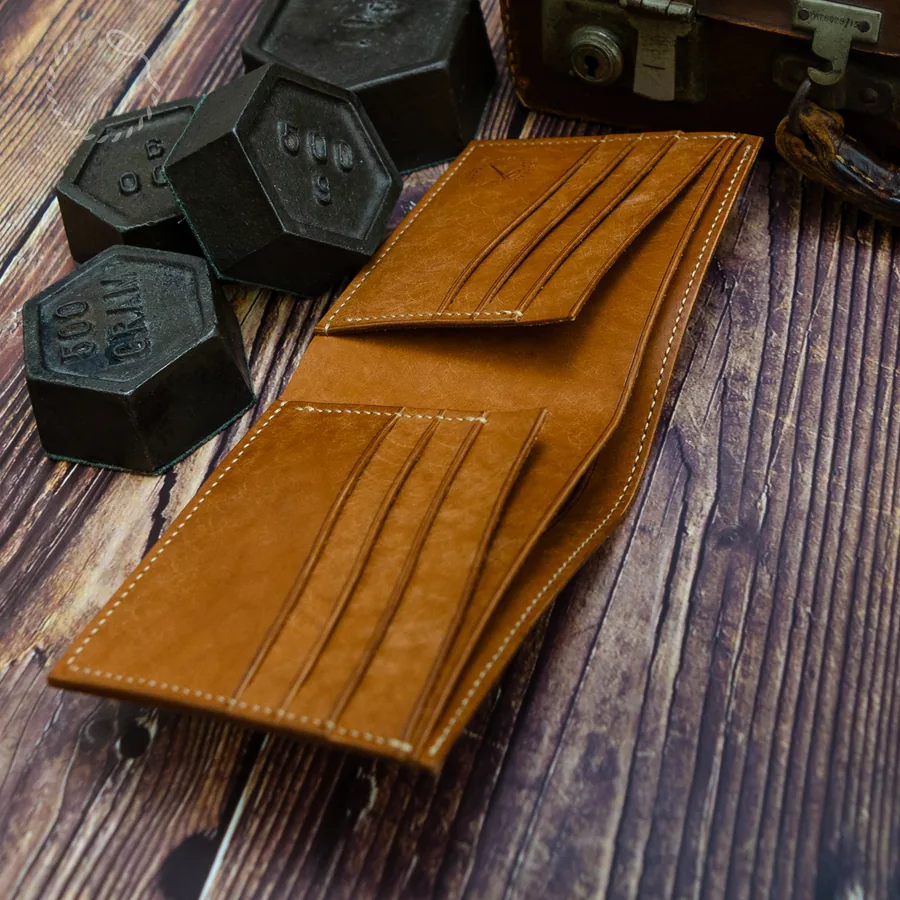
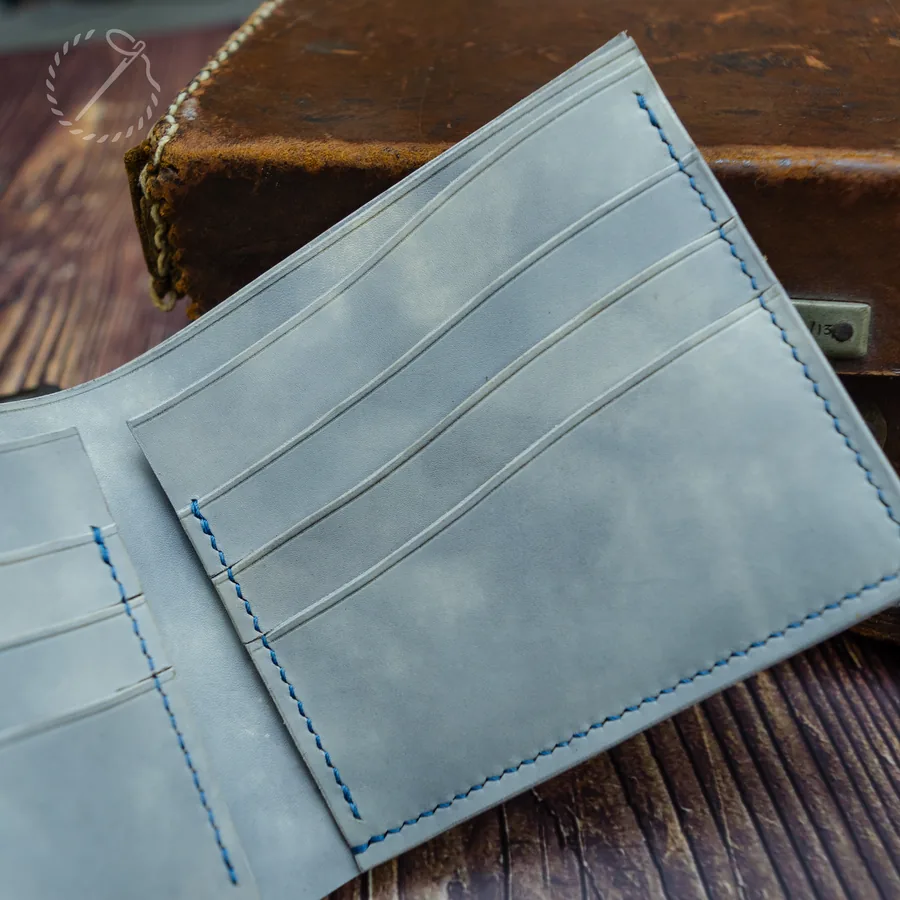
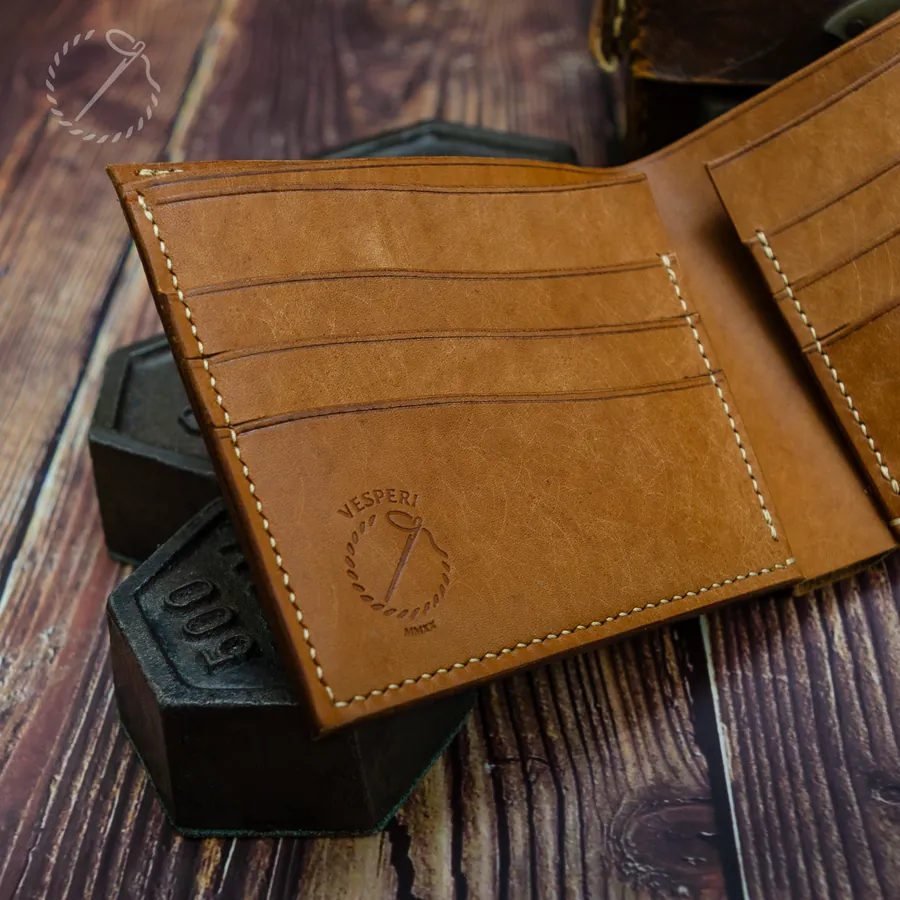
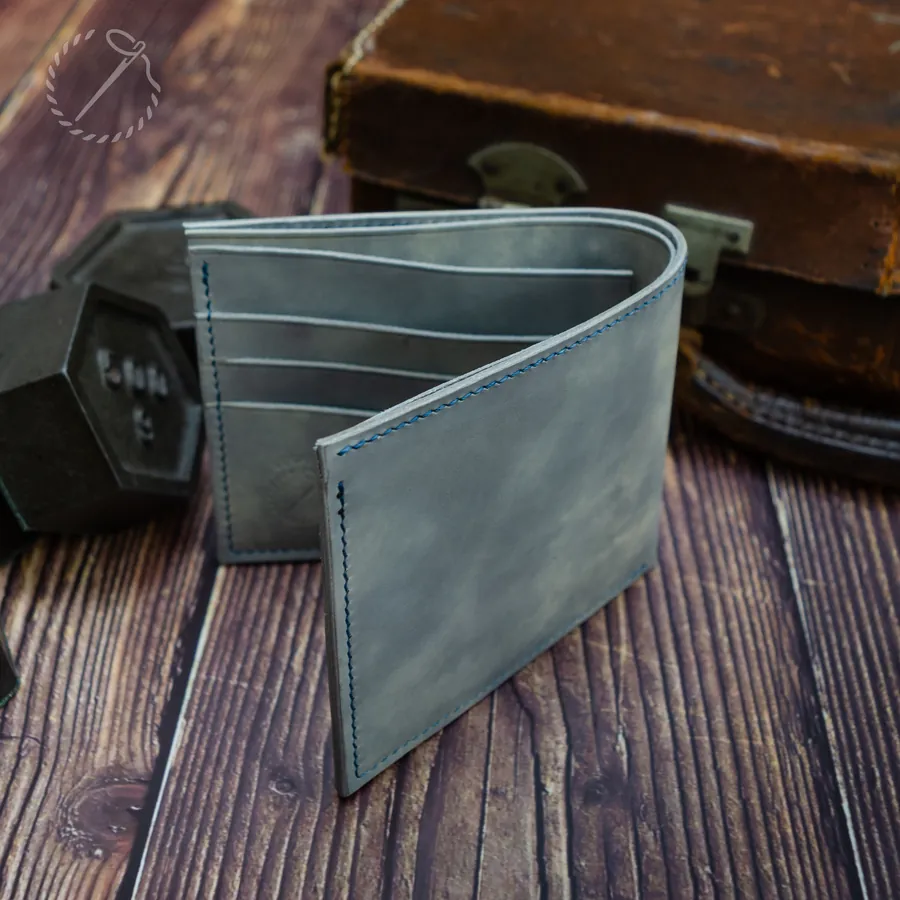
Six card slots, a full-width note pocket, and also two open receipt pockets — all hand-stitched. Looked after properly, a bifold like this becomes an heirloom — something to pass down.
From £145
Every Vesperi piece is made on one bench in Wellingborough, from a full-grain hide, by one pair of hands. No die cutting, no automated processing: handmade only. A wallet like this takes most of a working day, and it is made for you rather than for a shelf — your hide, your stitch, your commission, made in England. Below is the creation journey, step by step — and further down the page, photographs taken at the bench while the work is in progress.
Every piece begins as a drawing: what it has to hold, how it opens, where the fold sits. The shape is worked until every fold and pocket has a job to do — a wallet that bulges in a pocket was never drawn properly.
The drawing becomes a mock-up in card and offcut, and that is where the design is refined: fold thickness, pocket depth, the angle of an edge, all adjusted and tested until the pattern behaves. Prototyping settles the design before any leather is cut, so the finished piece starts from a proven pattern rather than an experiment.
A factory die-cuts its leather sheets to a fixed pattern and takes what comes off the sheet. I cut every panel by hand instead, working around the hide's marks, its grain and its natural imperfections, so each part comes from the piece of hide that suits it. What you get is a matched set of panels cut from one hide for a bespoke piece: no two identical.
Two needles and one waxed thread, pulled through each hole in turn. A machine stitch is a single loop — pick one and the seam runs — while a saddle stitch is a row of separate locks that hold even if one is ever broken. Set by hand, every stitch leans at the same slight angle, which is what a hand-stitched edge looks like, and the seam is built to outlive the leather around it.
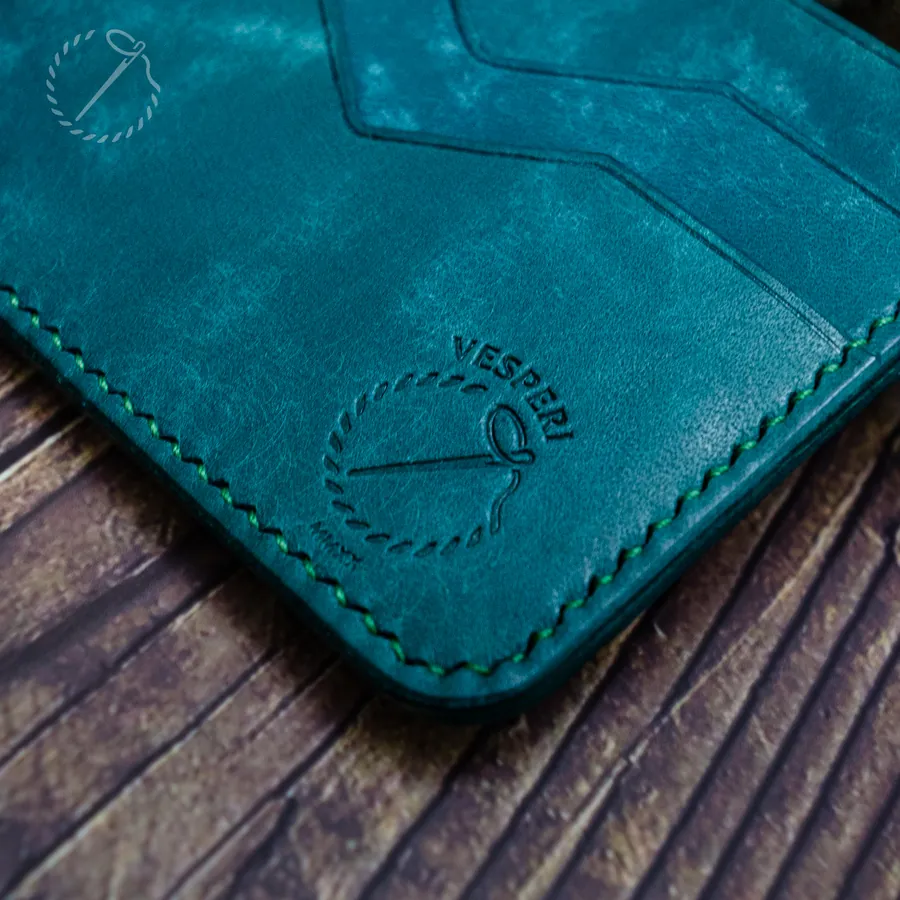
Sanded, damped, then rubbed with a Japanese burnishing agent until the edge goes dark and glassy. Paint sits on top and lifts off in a pocket. Burnished leather is the fibre itself, finished to take the wear of a pocket.
Every piece is made after you order it, so nothing sits in a warehouse going dry. About two weeks from order to dispatch — and if the bench is busy I will say so rather than promise a date I cannot hold.
Halfway through is the honest view: the offcuts, the skived strips, the piece that is not finished yet.
Tell me what you carry and what it needs to hold, and I will come back with a shape, a hide and a price. No deposit until you have seen the number.
Or write directly: [email protected]